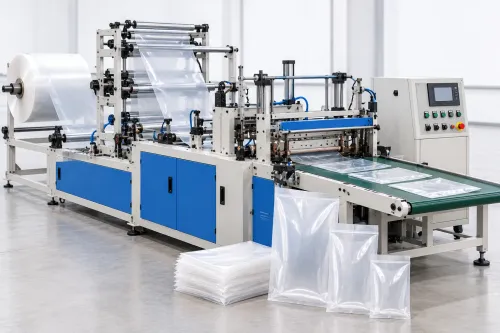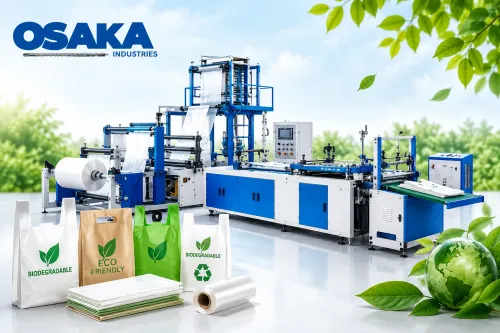
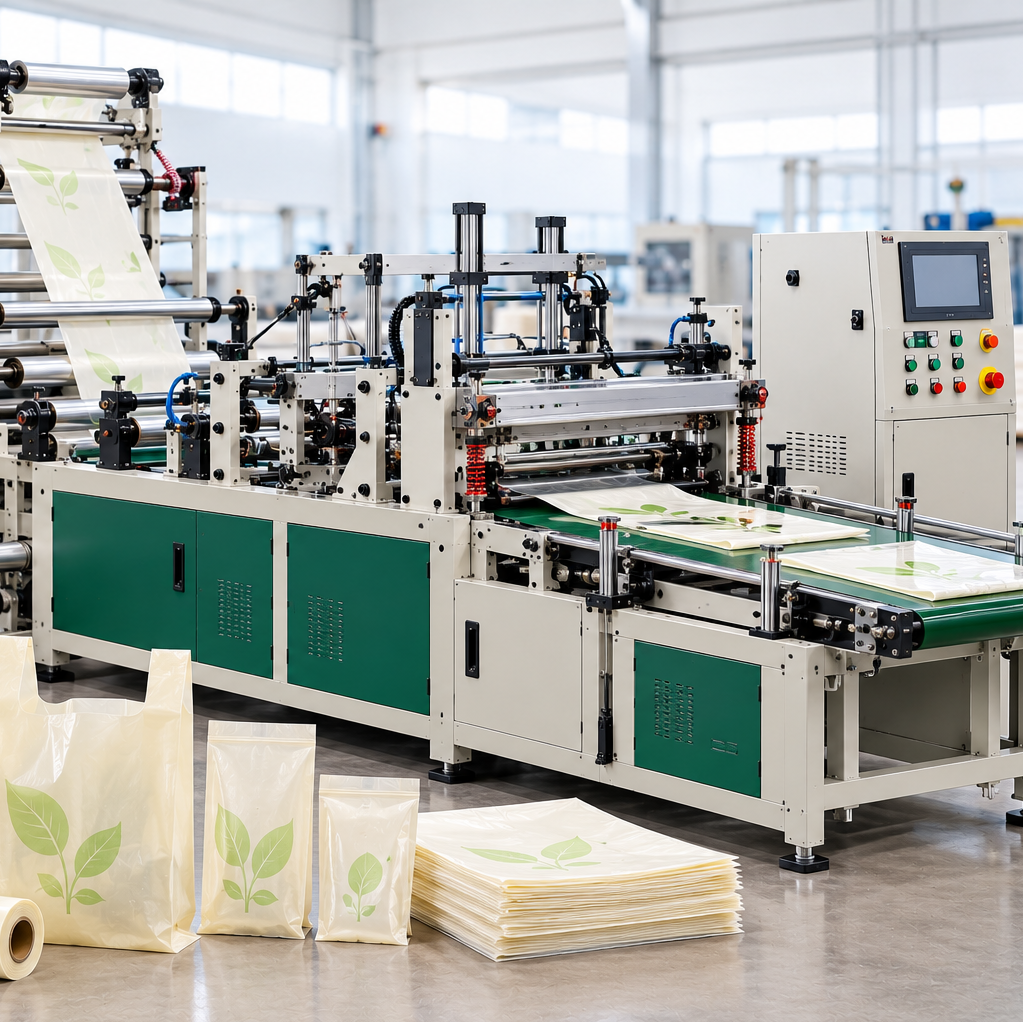
Compostable packaging projects require careful coordination between material selection, certification requirements, processing conditions, finished-product design, plus machinery capability. Selecting a Compostable Bag Making Machine Manufacturer should therefore begin with the bag specification rather than a generic equipment catalogue.
Businesses in Delhi entering compostable packaging may serve retailers, food-service suppliers, institutional buyers, waste-management applications, plus other packaging segments. Each market can have different expectations regarding bag dimensions, printing, thickness, sealing, plus material composition.
Clarify the Material First
The word compostable describes a material characteristic, not a single universal resin.
Different formulations can behave differently during film conversion plus bag production.
Before finalising equipment, buyers should discuss the specific material grades they intend to process. Technical data from the material supplier can help machinery teams understand relevant processing characteristics.
This reduces the risk of selecting machinery around assumptions.
Separate Film Production From Bag Conversion
A complete compostable bag manufacturing project may involve multiple production stages.
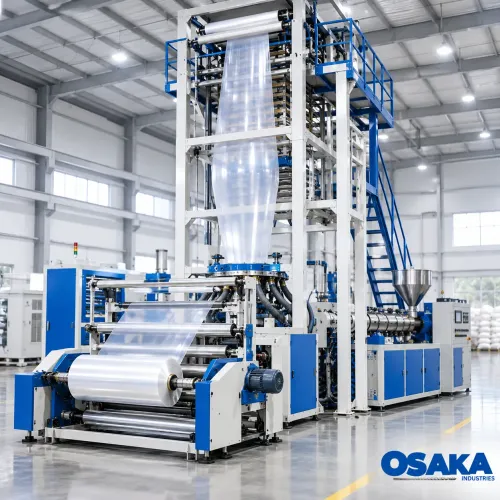
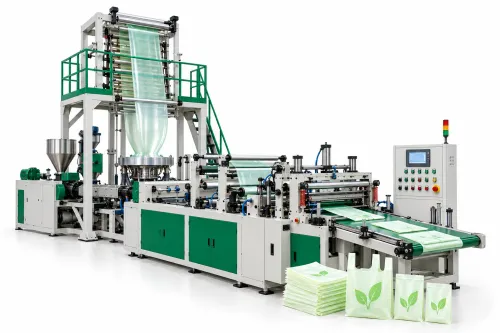
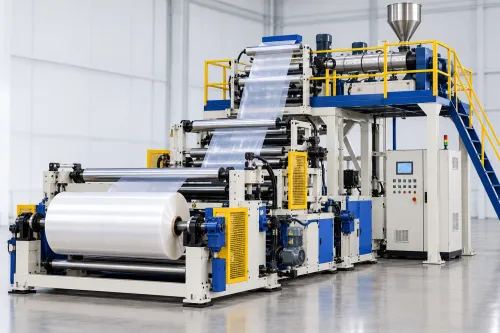
Film first needs to be produced using suitable extrusion equipment unless the business plans to purchase ready-made film rolls. The film then moves into bag conversion, where it is cut plus sealed into required dimensions.
Entrepreneurs should decide whether their project covers:
- Film extrusion
- Bag conversion
- Printing
- Punching
- Counting
- Packing
This distinction significantly influences total machinery planning.
Match Equipment to the Bag Range
A manufacturer supplying several compostable bag sizes needs sufficient production flexibility.
Create a product matrix containing each planned bag type, dimensions, thickness, material, plus monthly volume.
This exercise can reveal which products represent the main workload.
Machine selection should prioritise the sizes expected to account for regular production instead of unusual specifications that may be manufactured only occasionally.
Study Seal Performance
Seal integrity deserves particular attention when processing newer material formulations.
Temperature settings, dwell characteristics, film condition, plus production speed can influence the finished seal.
During equipment evaluation, discuss how the machine accommodates changes in material plus thickness.
Sample production trials can provide useful information when suitable material is available.
Calculate Productive Capacity
A machine's rated speed should not automatically be treated as daily saleable output.
Factories experience setup time, roll changes, cleaning, adjustments, quality checks, planned maintenance, plus production changeovers.
A practical capacity estimate should account for these activities.
For example, a business planning several short batches each day may experience more setup time than a unit running one standard bag size throughout a shift.
Check the Broader Production Setup
Delhi industrial businesses should evaluate infrastructure before machinery installation.
Review electrical capacity, floor space, ventilation, raw-material storage, film-roll storage, finished-product packing, plus dispatch movement.
If film extrusion is included, vertical clearance becomes particularly important.
Factory planning should create a logical flow from incoming material to finished packed bags.
Assess Manufacturer Communication
A machinery provider should be able to discuss technical requirements in clear production terms.
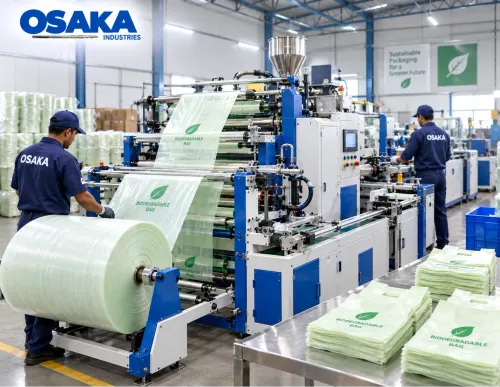
Osaka Industries works from Delhi within film extrusion plus bag-making machinery manufacturing. Businesses evaluating compostable packaging equipment can discuss intended materials, bag specifications, production targets, plus factory conditions before identifying a suitable configuration.
A strong supplier discussion should clarify what the machine is designed to process, what output assumptions apply, what utilities are needed, plus what operator knowledge is expected.
Compostable packaging can represent a valuable manufacturing opportunity, yet machinery should be selected with the same technical discipline applied to conventional packaging production.
Material understanding, realistic capacity planning, suitable conversion equipment, plus consistent quality checks create a stronger foundation for dependable commercial production.
Keywords