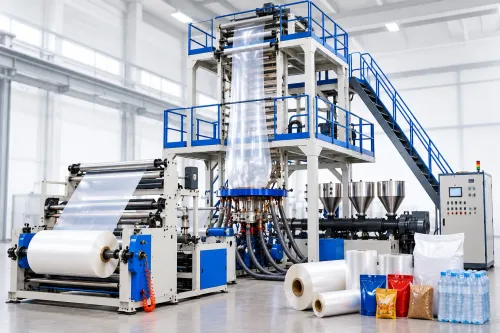
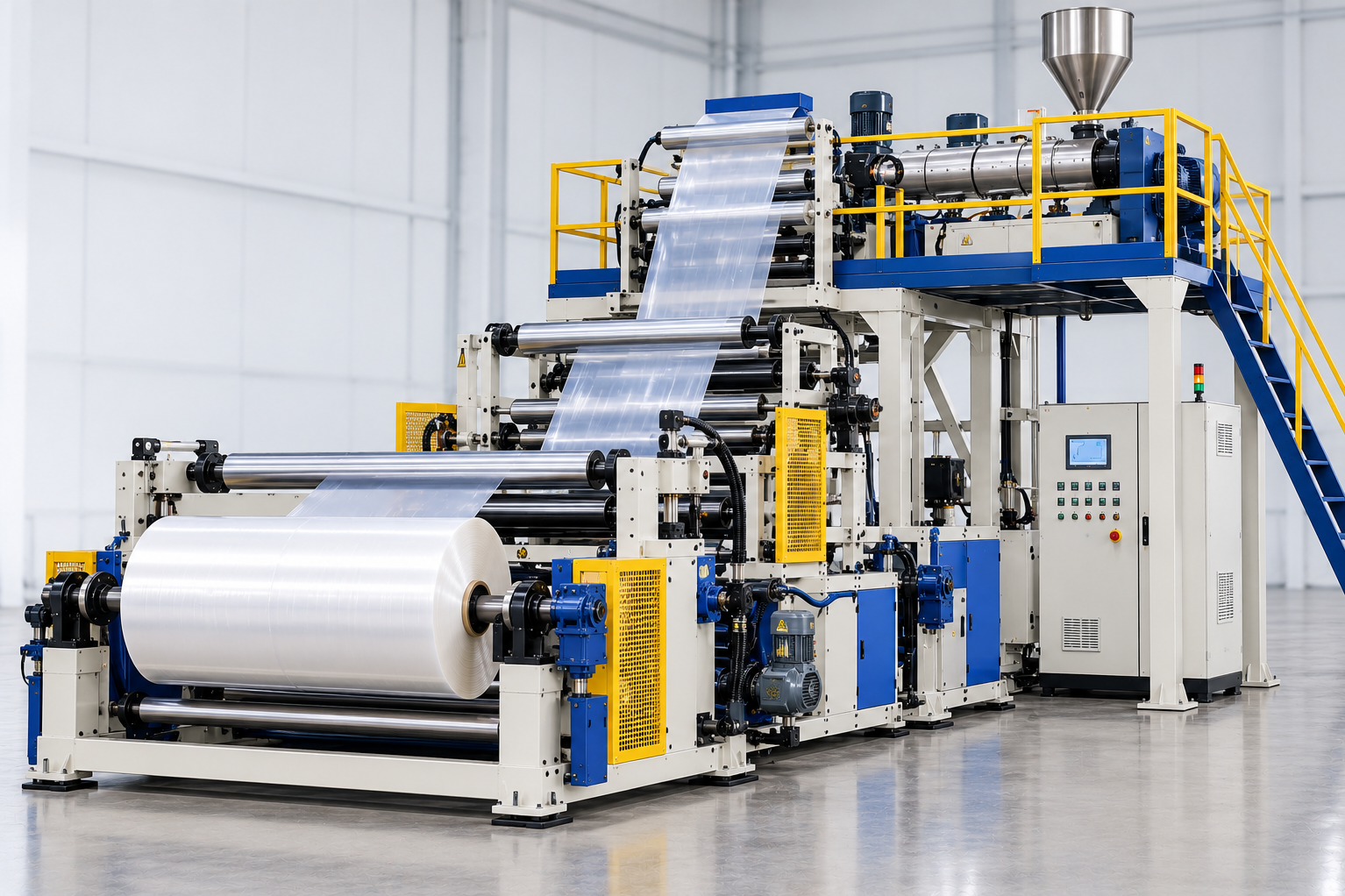
Stretch film production requires careful control because customers expect rolls that perform consistently during wrapping, storage, transportation, plus load handling. Businesses evaluating a Stretch Film Machine Manufacturer should define the intended product range before comparing equipment.
For Delhi NCR packaging companies, potential customers can include warehouses, logistics businesses, manufacturers, distributors, exporters, plus fulfilment operations. These users may require different roll dimensions, film thicknesses, plus wrapping characteristics.
Identify the Intended Stretch Film Market
Start by defining who will buy the finished film.
Hand-use rolls can have different production requirements from film intended for machine wrapping. Industrial users may also request specific roll weights, widths, thicknesses, core dimensions, plus packaging formats.
A machinery specification becomes easier to develop once the customer segment is clear.
Understand the Production Variables
Film manufacturing performance depends on multiple factors working together.
Important variables include:
- Raw-material formulation
- Extrusion temperature
- Film thickness
- Cooling performance
- Line speed
- Winding tension
- Roll dimensions
- Core specifications
Small changes can influence finished-roll quality.
Machinery should therefore be assessed as a complete production system rather than a collection of individual components.
Winding Quality Deserves Attention
A stretch film roll needs controlled winding.
Poor tension management can affect roll appearance plus handling. Rolls may become difficult to use efficiently when winding is inconsistent.
During machine evaluation, ask how winding settings are managed across different film specifications.
Businesses planning several roll sizes should also understand the changeover procedure.
Estimate Real Production Demand
Buying excess capacity can increase investment without creating immediate commercial benefit. Selecting too little capacity can create a bottleneck once orders grow.
Prepare monthly demand estimates based on realistic sales assumptions.
Separate confirmed demand from projected future demand.
This gives management a clearer basis for deciding whether the production line should primarily serve current orders, near-term growth, plus a larger expansion strategy.
Consider Raw-Material Efficiency
Raw material typically represents a major production expense.
Stable processing plus consistent film thickness can therefore have a meaningful impact on production economics.
Buyers should evaluate the machine's ability to support controlled operation across the required film range.
Quality control procedures should also be planned before commercial production begins.
Include Utility Costs in the Investment Review
Equipment price is only one part of manufacturing economics.
A realistic project assessment should include electricity, labour, raw material, floor space, maintenance, packing, storage, plus rejected production.
This gives buyers a better picture of operating cost per saleable roll.
It also helps determine the production volume required to support the investment.
Assess the Machinery Supplier
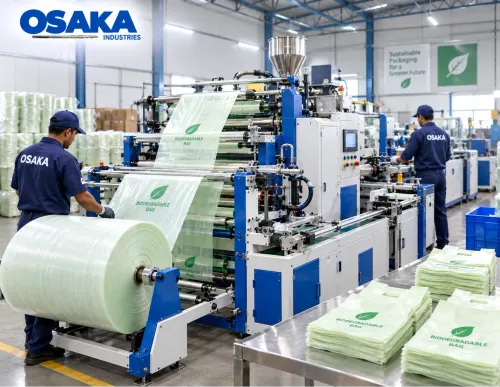
Osaka Industries manufactures film-related machinery in Delhi for industrial packaging applications. Buyers evaluating a production project should provide intended film specifications, output expectations, factory dimensions, plus utility details during technical discussions.
Supplier evaluation should include machine configuration, documentation, installation planning, operator guidance, service approach, plus spare-component requirements.
Ask detailed questions before placing an order.
Build the Project Around Saleable Film
The most effective buying process starts with the finished product.
Collect sample specifications from potential customers. Identify common widths, thicknesses, roll weights, plus usage conditions. Estimate demand. Review raw-material availability. Calculate expected operating costs.
Only then should machinery specifications be finalised.
This approach keeps the investment connected to actual market requirements.
For industrial film producers in Delhi plus nearby manufacturing regions, disciplined planning can help turn machinery capacity into commercially useful production rather than unused technical capability.
Keywords