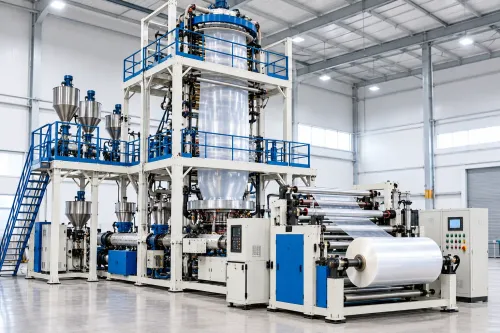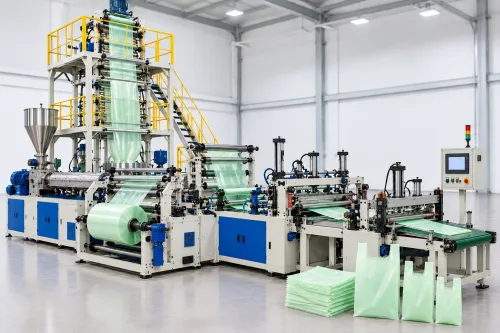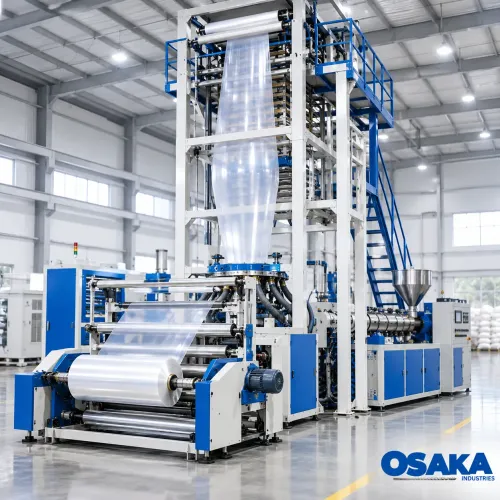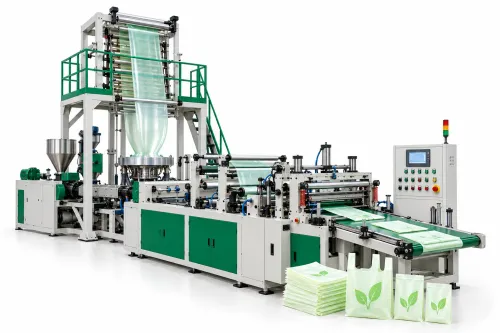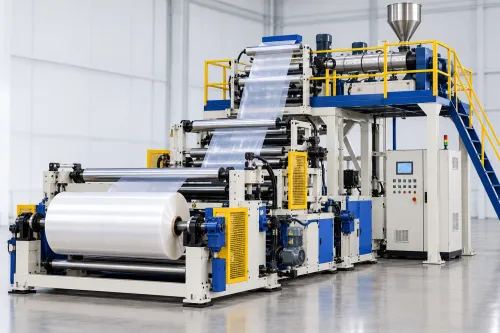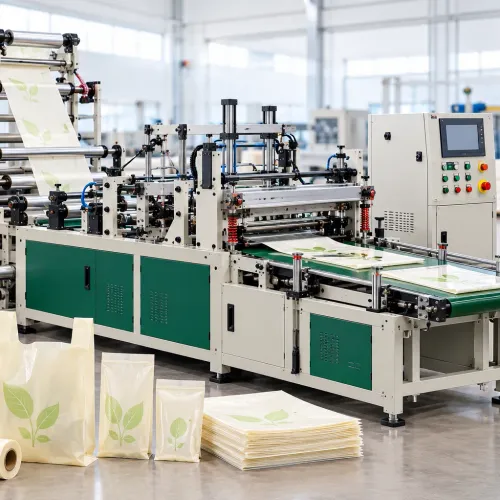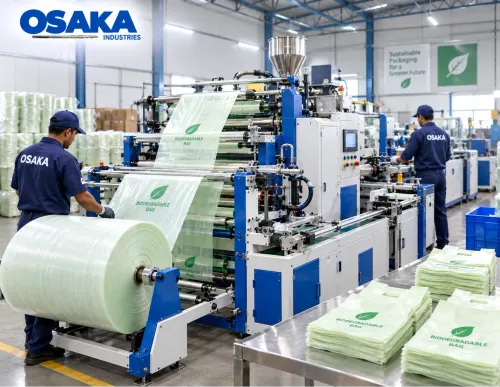
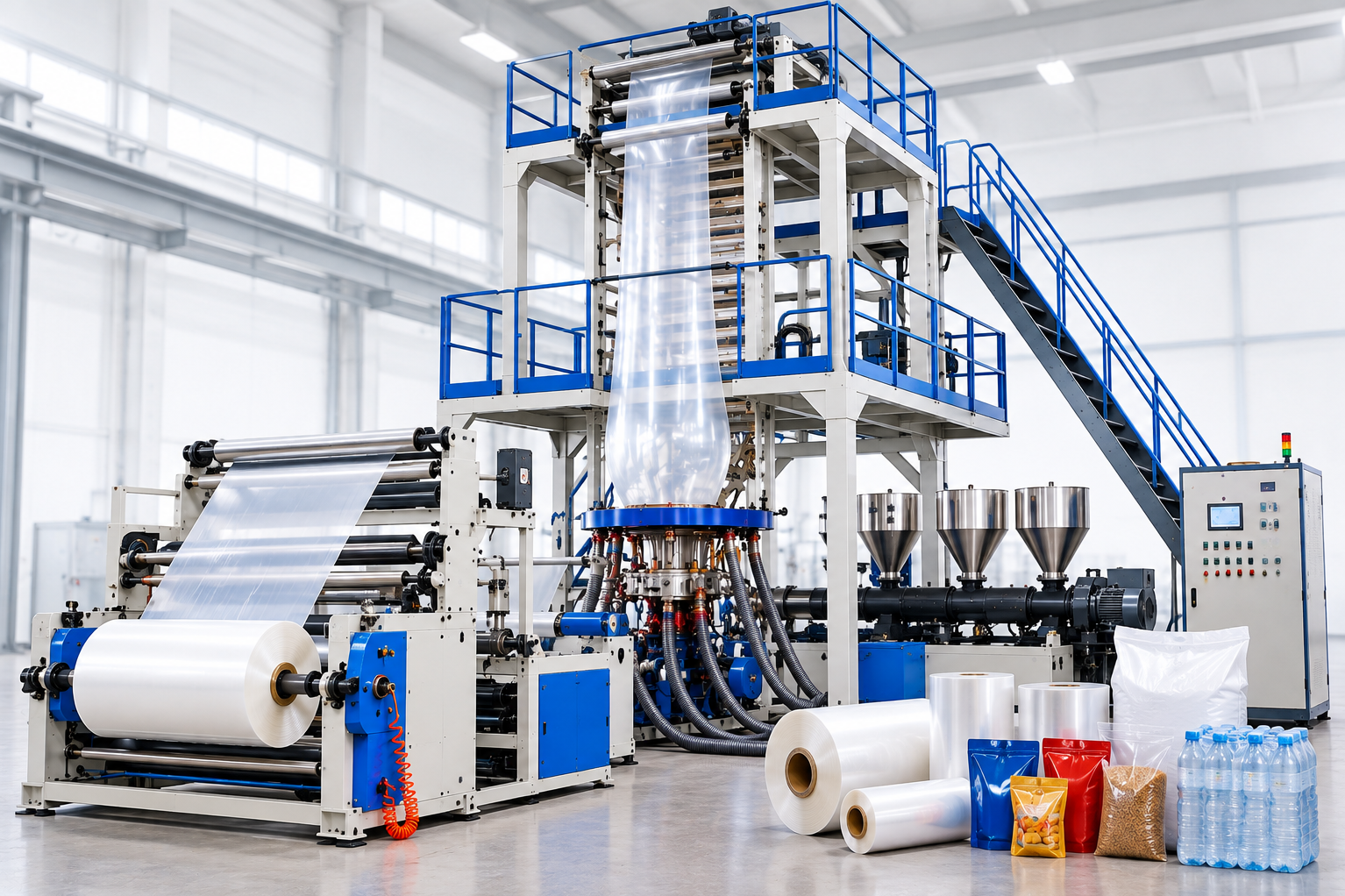
ABA blown-film technology occupies an important position between basic monolayer extrusion plus more complex multilayer configurations. For packaging producers exploring this technology, understanding the structure is essential before approaching an ABA Blown Film Plant Machine Manufacturer.
The term ABA describes a multilayer film arrangement in which the outer layers share one material stream while the middle layer uses another. This configuration can give manufacturers greater control over material distribution while keeping the production setup focused on practical film applications.
How an ABA Structure Works
An ABA line typically creates three film layers through two primary extrusion streams.
The outer A layers originate from one material stream. The central B layer comes from another stream.
The combined structure can help manufacturers develop films with different material distribution strategies compared with a basic single-layer film.
The exact benefit depends on formulation, film application, processing conditions, plus quality targets.
Why Material Distribution Matters
Raw material represents a major operating cost in film manufacturing.
The ability to control material placement across film layers can support more deliberate formulation strategies. Manufacturers may use different materials within the central layer while maintaining required characteristics at the outer surfaces, subject to application needs plus material compatibility.
This requires technical understanding.
A machinery purchase alone cannot determine the correct formulation. Material trials, process settings, quality testing, plus production experience remain essential.
ABA Is Not Simply About Adding Layers
Buyers sometimes assume that any multilayer system automatically provides better output than monolayer machinery.
The correct question is whether the intended product benefits from the layer structure.
Before considering ABA equipment, define:
- Finished film application
- Required width
- Thickness range
- Material formulation
- Layer distribution target
- Production volume
- Winding requirements
- Downstream conversion process
These parameters reveal whether the technology fits the production plan.
Cooling Plus Bubble Stability Affect Results
Blown-film production depends heavily on stable bubble formation.
Cooling conditions influence film formation plus production consistency. The machine's extrusion system, die, air arrangement, tower geometry, take-up mechanism, plus winding setup need to function as one coordinated line.
During machinery evaluation, buyers should discuss the expected production range rather than focusing on a single maximum-output figure.
Operator Skills Still Matter
Automation improves control, yet blown-film production still requires knowledgeable operators.
Teams need to understand temperature settings, bubble adjustment, material changes, film observation, winding conditions, plus basic troubleshooting.
Businesses entering film manufacturing for the first time should include operator development within the project plan.
Training can have a significant influence on how quickly a new production line reaches stable routine operation.
Delhi Buyers Should Consider Factory Conditions
Industrial units across Delhi NCR differ considerably in floor area, power availability, ceiling height, ventilation, plus material-handling arrangements.
Before finalising an ABA plant, buyers should inspect their site carefully.
Machine placement should allow safe operating space plus maintenance access. Raw-material movement should be practical. Finished rolls need an efficient route from winding to storage.
These details affect daily productivity long after installation.
Start With a Clear Production Brief
Osaka Industries manufactures film extrusion equipment from Delhi for packaging-related applications. Buyers approaching the company can improve technical discussions by preparing sample film specifications, expected production volumes, material information, factory dimensions, plus electrical details.
ABA technology can provide useful manufacturing flexibility when selected for the right application.
The strongest equipment decisions begin with a clear understanding of the film being produced. Once product requirements are defined, buyers can evaluate machine configuration, production capability, factory readiness, plus operating resources with far greater confidence.
Keywords