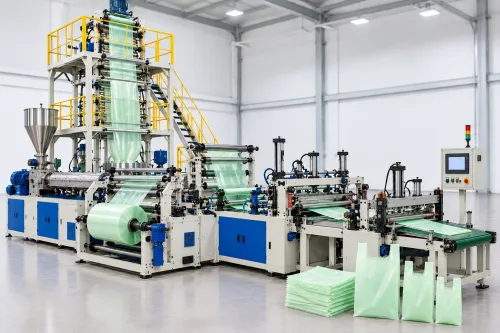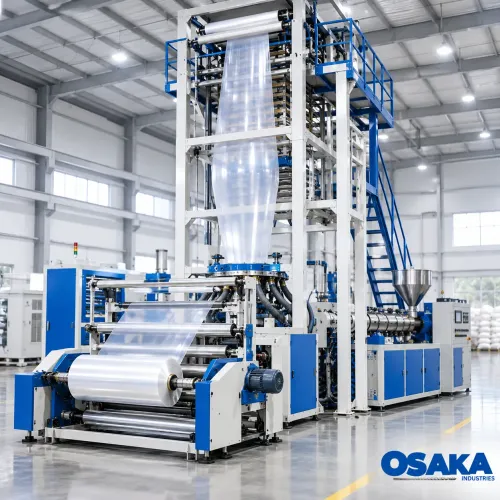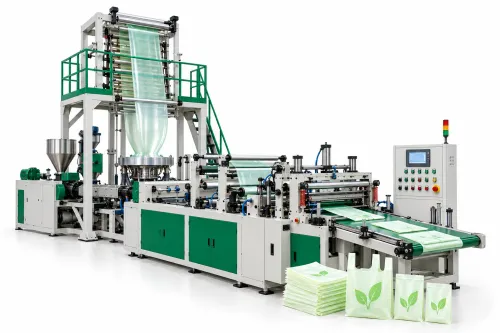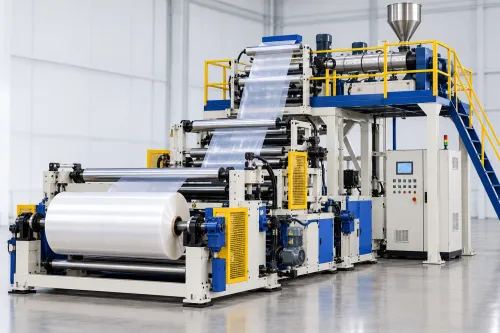
Film production begins long before molten material reaches an extrusion die. Plant layout, raw-material selection, output targets, film width, thickness requirements, cooling conditions, plus downstream processing all influence machinery selection.
A business researching a Film Blowing Machine Manufacturer should therefore understand the basic production variables before comparing equipment specifications.
Delhi has a substantial packaging-related industrial ecosystem, giving buyers from Delhi NCR plus nearby states access to machinery, fabrication, electrical expertise, logistics support, plus packaging markets. A structured evaluation remains essential because every film production requirement is different.
Understand the Film Blowing Process
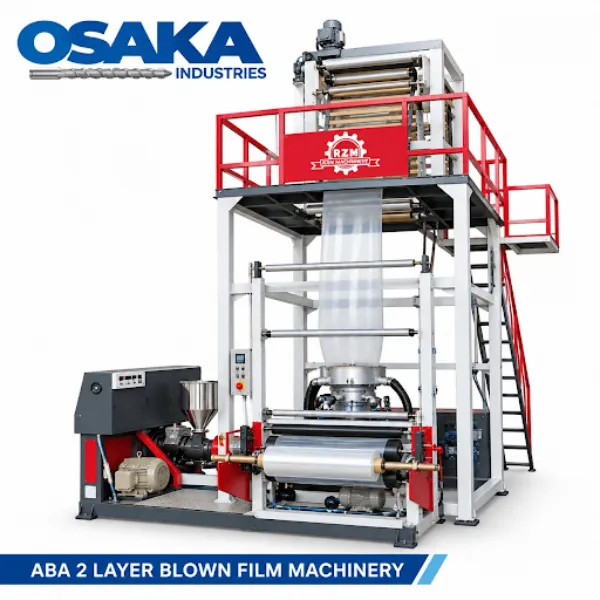
A blown-film line converts suitable polymer material into tubular film.
Material enters the extrusion system, where controlled heating prepares it for processing. The material passes through a die before air creates a film bubble. Cooling stabilises the film while take-up equipment guides it toward winding.
Several variables influence the final film.
These include:
- Raw-material characteristics
- Extrusion temperature
- Die configuration
- Airflow
- Bubble stability
- Film width
- Thickness control
- Take-up speed
- Winding quality
A production line must manage these variables consistently if the manufacturer expects repeatable film output.
Define the Required Film Width
Film width is a fundamental machine-selection parameter.
A packaging company producing narrow film for smaller bags has different equipment requirements from a producer manufacturing wide industrial film.
Buyers should identify their minimum plus maximum practical film widths before requesting quotations. This allows the equipment supplier to recommend a suitable die, extruder capacity, tower arrangement, plus winding configuration.
Consider Thickness Requirements
Film thickness affects raw-material consumption, mechanical characteristics, production economics, plus downstream conversion.
The required thickness range should reflect actual customer applications. Buyers should avoid selecting equipment based solely on broad capability claims without discussing the thickness range they expect to run regularly.
Stable processing at normal production settings is more useful than an impressive specification that rarely matches daily production.
Evaluate Output Realistically
Output figures attract considerable attention during machinery comparisons.
Actual production can depend on material grade, film thickness, width, cooling efficiency, machine configuration, operator settings, plus product requirements.
Instead of asking only for maximum output, ask about expected practical output for the specific film you intend to manufacture.
Provide sample production details whenever possible.
Look at Winding Requirements
Film quality does not end at the extrusion tower.
Poor winding can create rolls that are difficult to store, transport, print, laminate, slit, plus convert into finished packaging.
Buyers should discuss required roll dimensions, winding tension, core sizes, roll handling, plus downstream processes.
This creates a more complete machinery specification.
Plan the Factory Around the Equipment
A film blowing plant requires adequate vertical clearance, electrical capacity, ventilation, material movement space, plus safe operator access.
Before ordering machinery, review:
- Available ceiling height
- Machine footprint
- Electrical load
- Raw-material storage
- Finished-roll storage
- Operator movement
- Maintenance access
- Material feeding route
Early factory planning can prevent expensive layout changes after delivery.
Technical Communication Helps Reduce Specification Gaps
Osaka Industries serves machinery requirements from Delhi for film extrusion plus packaging production applications. When discussing a proposed line, buyers should provide actual product specifications rather than requesting a general film machine.
A clear technical brief makes conversations more productive.
Film blowing equipment becomes part of a larger manufacturing system involving raw material, processing knowledge, operators, quality checks, winding, storage, plus downstream conversion.
Understanding these relationships helps industrial buyers select machinery based on production reality rather than headline specifications alone.
Keywords